
Unveiling the Potential of Li-Fi Technology in Education
In today's fast-paced world, where technology continually evolves, the realm of education is no exception. From traditional classrooms to virtual learning environments, educators are constantly seeking innovative ways to enhance the learning experience for students. One such groundbreaking technology that holds immense promise in the educational landscape is Li-Fi.
Niyaj Ansari
3/6/20232 min read

What is Li-Fi?
Li-Fi, short for Light Fidelity, is a wireless communication technology that utilizes light to transmit data. Unlike traditional Wi-Fi, which uses radio waves, Li-Fi harnesses the power of visible light spectrum to transmit information. This technology employs LED bulbs to emit light signals, which are then received and decoded by photo-sensitive detectors.
Advantages in Education:
High-Speed Data Transmission: Li-Fi boasts significantly higher data transfer speeds compared to Wi-Fi, making it ideal for bandwidth-intensive educational applications such as online lectures, interactive multimedia content, and real-time collaboration tools.
Enhanced Security: Since Li-Fi operates using light signals, it offers enhanced security features compared to traditional Wi-Fi networks. Light signals cannot penetrate through walls, providing a more secure and private communication channel within educational institutions.
Immune to Radio Interference: Li-Fi is immune to radio interference, making it suitable for use in environments where electromagnetic interference is a concern, such as laboratories and research facilities within educational institutions.
Integration with IoT Devices: With the proliferation of Internet of Things (IoT) devices in educational settings, Li-Fi presents an opportunity for seamless integration and communication between smart devices, creating a connected and interactive learning environment.
Energy Efficiency: LED bulbs used in Li-Fi technology are energy-efficient and can be integrated into existing lighting infrastructure within educational institutions, reducing energy consumption and operating costs.
Applications in Education:
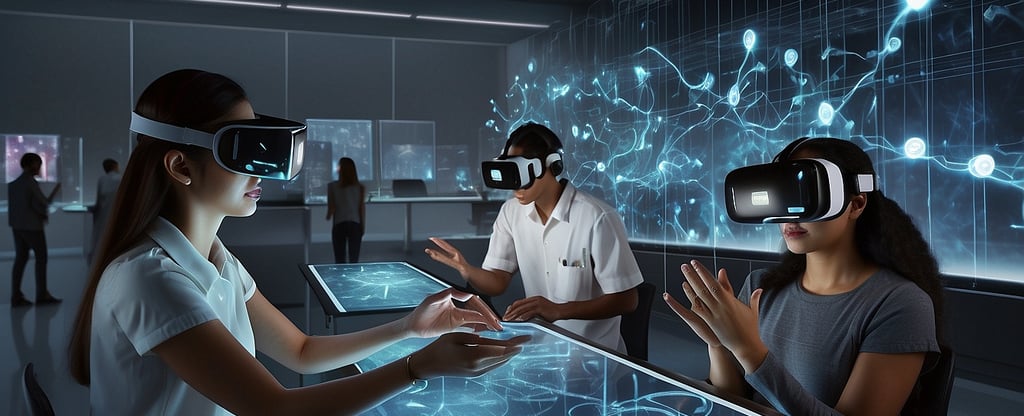
1-Interactive Learning Environments: Li-Fi enables the creation of interactive learning environments where students can engage with immersive multimedia content and participate in real-time collaborative activities.
2-Virtual Labs and Simulations: By harnessing Li-Fi technology, educational institutions can facilitate virtual laboratory experiences and simulations, allowing students to conduct experiments and explore scientific concepts remotely.
3-Distance Learning: Li-Fi opens up new possibilities for distance learning by providing high-speed wireless connectivity in remote areas where traditional internet infrastructure may be limited.
4-Smart Classrooms: Integration of Li-Fi technology in smart classrooms enhances the overall learning experience by enabling seamless connectivity between smart devices, interactive whiteboards, and educational resources.
Conclusion:
As the educational landscape continues to evolve, embracing innovative technologies like Li-Fi holds the potential to revolutionize the way students learn and educators teach. With its high-speed data transmission, enhanced security, and diverse applications in education, Li-Fi technology paves the way for a brighter, more connected future in learning.





Contact us
Whether you have a request, a query, or want to work with us, use the form below to get in touch with our team.